

There is a particular kind of calm that arrives when the light starts to fade and a soft, rose-tinted shoreline slips into shadow. On a quiet evening, standing barefoot on a Caribbean pink sand beach as the sky darkens, the world narrows to the hush of the waves and the glow on the horizon. That feeling of “flow in dark Caribbean pink sand beach” moments is what this guide is really about — the science, the destinations, and the little details that make those nights feel unforgettable.
What makes pink sand beaches so rare?
Pink sand beaches look almost unreal, but the color comes from something surprisingly small: tiny marine organisms and fragments of coral and shells mixed into regular white sand. In many Caribbean locations, including Harbour Island in The Bahamas and Barbuda, the soft blush hue is mainly due to microscopic foraminifera with reddish-pink shells that grind down and blend with pale sand grains.
As waves and currents constantly erode offshore reefs and nearby seabeds, those pink or red fragments are carried ashore and spread along the tide line. The result is sand that can appear pale champagne in full sun but turns deeper rose or even muted, smoky pink when the surface is wet or when the light is low, like at sunset or after dark.
These beaches remain rare because they depend on a very specific combination of reef ecosystems, local geology, and gentle enough conditions to let delicate particles accumulate rather than wash away. That is why only a handful of Caribbean islands — such as Harbour Island, Barbuda, and parts of Barbados — are consistently mentioned when travelers talk about pink sand shores.
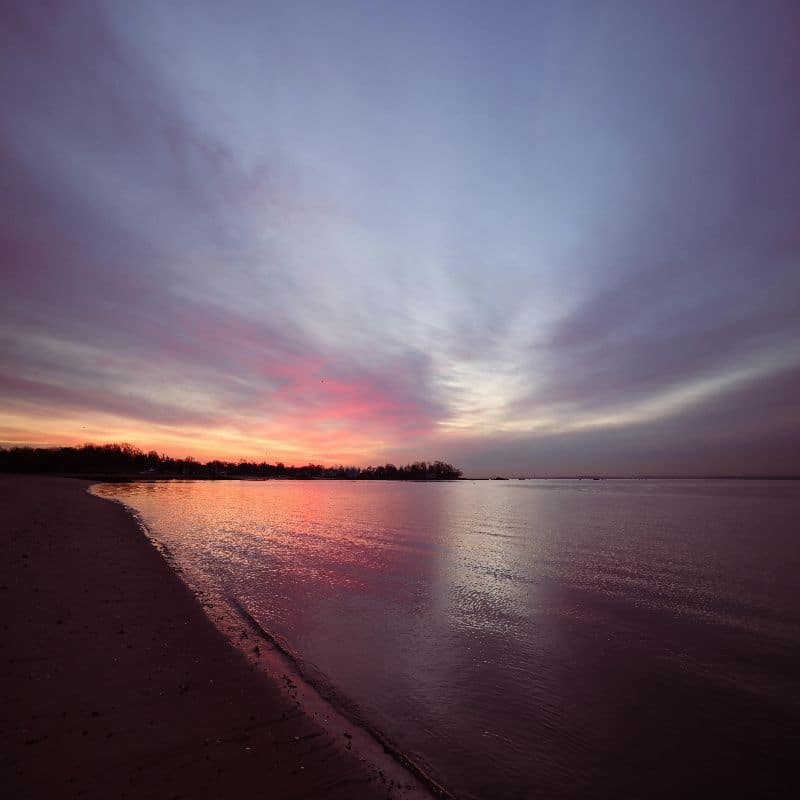
flow in dark caribbean pink sand beach: why the night feels different
Daytime on a pink sand beach is about color and clarity, the bright contrast of turquoise water and pale rose shoreline. Night, or even just the blue hour after sunset, changes the mood entirely. The sand loses some of its obvious pinkness and shifts into soft, shadowy tones, while the sea darkens into inky blue or charcoal, and the sound of the surf suddenly feels louder and more deliberate.
In those conditions, it becomes easier to slip into a kind of flow state — walking slowly along the waterline, listening to waves and wind, noticing how the foam glows slightly when it catches distant lights. Perhaps you sit for a while instead, letting your eyes adjust to the dark, watching the clouds drift past a scattering of stars. It is not about ticking off sights anymore; it is about letting time stretch and accepting that nothing much “happens,” yet somehow the moment feels complete.
The darker it gets, the more your senses start to rearrange what matters. The sand still cushions your steps, but you start to feel the temperature of the air, the direction of the breeze, and even small changes in the rhythm of the waves. On some islands, you might see faint lights from fishing boats offshore, or a lantern from a beach bar behind you, which adds just enough glow to keep you comfortable without breaking the magic.
The best Caribbean pink sand beaches to visit
Before diving into specific islands, it helps to think about what kind of pink sand experience you want. Some travelers dream of long, deserted stretches where they might not see another person for an hour; others feel better staying near a resort with restaurants, loungers, and easy access back to their room after a late evening walk. The Caribbean gives you examples of both, and a few options in between.
Pink Sands Beach, Harbour Island, Bahamas
Pink Sands Beach on Harbour Island is often the first place that comes up when people talk about Caribbean pink sand, and for good reason. This Atlantic-facing beach stretches for roughly three miles, with a width that typically ranges from about 50 to 100 feet, creating a generous ribbon of soft, pink-hued sand bordered by clear blue water.
The color here is most striking where the sand is wet, especially along the waterline where wave after wave leaves behind a fresh sheen of crushed shells and foraminifera. In full daylight, you get that iconic pastel scene you see in many travel photos, but late in the day, the effect becomes more subtle and, arguably, more interesting. As the sun drops, the sand can look almost rose-gold under the last light, then shift into a muted blush under twilight.
Getting to Harbour Island usually involves flying into North Eleuthera and then taking a short boat ride across to the island, followed by a quick taxi or golf cart ride to the shoreline. Once there, you will find a mix of upscale boutique hotels and rental homes tucked behind low dunes and palm trees, many within an easy walk of the beach itself. That proximity makes it simple to return after dinner for a slow night walk, knowing your room is only a few minutes away.
During the day, you can swim in generally calm waters, go snorkeling near offshore reefs, or even join guided activities like horseback riding along the shoreline. In the evening, activities tend to slow down, but that calmer rhythm is exactly what suits someone seeking that flow in dark Caribbean pink sand beach experience. A quiet stroll under the stars, with the sand still cool underfoot, often becomes the highlight of the trip.
Barbuda’s 17-Mile Beach and pink shores
Barbuda, the quieter sister island to Antigua, is famous for a long, uncrowded coastline where pink hues run for miles along otherwise pale sand. The often-mentioned 17-Mile Beach is not just a name; it really does feel almost endless when you stand at the water’s edge and look both ways, seeing little more than sea, sky, and a narrow ribbon of land.
Here the pink effect tends to come from tiny crushed shells and coral pieces that mix with the white sand and show up most clearly when the surface is damp. The contrast between the delicate blush near the water and the intense turquoise of the Caribbean Sea is striking in daylight. At dusk, the colors soften, and the whole scene can take on a pastel, dreamlike quality that feels almost otherworldly, especially if you happen to have a stretch of beach to yourself.
Reaching Barbuda typically involves a short flight or ferry from Antigua, followed by a transfer with a local guide or driver to the beach area. Many visitors join day tours that combine a stop at the island’s famous frigate bird sanctuary with time on the pink sand shore, while others stay overnight in small-scale accommodations that emphasize seclusion and simplicity. After dark, the island can feel very quiet, so it is wise to plan your evening walks near your lodging or as part of an organized outing.
If you are the kind of traveler who values solitude and a sense of untouched nature, Barbuda’s coast has a particular pull. It is easy to lose track of time while walking along the waterline, stopping to watch small waves rearrange the shells at your feet. On a moonlit night, the surface of the sea can gleam enough that you hardly need a flashlight, and the sheer emptiness of the horizon makes it feel as if you have wandered into a private version of the Caribbean.
Crane Beach, Barbados
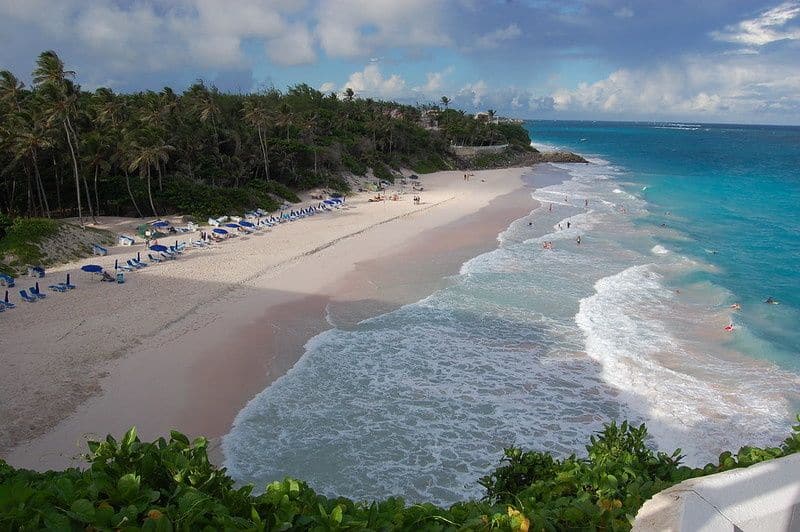
Crane Beach on the southeastern coast of Barbados adds drama to the pink sand story. Instead of a flat, low-profile shoreline, you get a curved cove backed by cliffs and a mix of strong Atlantic swells and sheltered swimming areas. The soft blush of the sand comes from finely ground coral and shell fragments, which lend the beach its distinctive tone when the light catches it at the right angle.
This beach has a long history, including its role as the landing point for cargo handled by the old crane that gave the area its name. Today, the cliffs above host The Crane Resort and other accommodations, which overlook the shoreline from a dramatic height. From up there, you can watch the play of waves and sun over the pink-tinted sand throughout the day, then later head down for a more intimate experience at water level.
Conditions at Crane Beach can vary: some days invite relaxed swimming and body-surfing, while others bring stronger waves that suit confident swimmers and those who prefer watching the surf from a towel on the sand. Around sunset, the shadows from the cliffs lengthen and the sand darkens slightly, making the pink hues subtler but still present, especially where the foam retreats. If you are staying nearby, it is not hard to plan an early dinner and then come back down just to listen to the sound of the waves pounding the cove after dark.
Other notable Caribbean pink sand spots
Beyond these headline beaches, the wider Caribbean hosts a few other shorelines with pink or pink-tinged sand. Some guides mention smaller beaches in Bonaire and on parts of Eleuthera, as well as pockets of sand where coral fragments add a soft blush that may only be noticeable in certain seasons or lighting conditions. While these may not all offer the same consistently rosy look as Harbour Island or Barbuda, they can still be worth seeking out if you enjoy hunting for subtler natural details.
Choosing between these options often comes down to what matters most to you: easy access and amenities, dramatic scenery, or that sense of being almost entirely alone with the sea. In practice, you might end up designing a trip that combines more than one: perhaps starting in Barbados for a mix of history and dramatic coastline, then heading to a more secluded island like Barbuda for the deeper, quieter flow that only a very long, almost empty beach can offer.
Bioluminescent glow and dark Caribbean nights
The phrase “dark Caribbean beach” naturally makes many people think of bioluminescence — waves that flash softly blue when disturbed, or patches of glowing plankton around your ankles. In reality, pink sand and strong bioluminescence do not usually appear together in the exact same location. Even so, it is absolutely possible to design a trip that combines pink sand days with bioluminescent nights within the same region, especially around islands like Puerto Rico and others with nearby bio bays.
Bioluminescent bays in the Caribbean owe their glow to dense populations of microscopic organisms called dinoflagellates. When these organisms are stirred by movement — a paddle stroke, a fish darting past, or your hand sweeping through the water — they emit brief pulses of light. The effect looks brightest on very dark nights with minimal light pollution and little moonlight, which is why many local guides schedule tours around the lunar cycle and weather conditions.
Pairing pink sand days with bioluminescent nights
One way to deepen your experience of the region is to treat pink sand beaches as your daytime anchor and bio bays as your night-time highlight. You might, for example, spend several days on a relaxed island with a pink shore, then fly or ferry to Puerto Rico to visit places like Mosquito Bay, Laguna Grande, or La Parguera, where guided tours take you out on kayaks or small boats after dark. That combination gives you two very different forms of natural light: the soft, pastel glow of afternoon on the sand, and the electric sparks of water that comes alive at night.
Even if you cannot fit both into a single trip, simply understanding how these phenomena work can change how you see a dark shoreline. Standing on a quiet pink sand beach at night, you may notice tiny flickers in the foam or patterns of light around small fish in very calm, clear water, especially near areas with healthy plankton populations. It may not be as intense as a dedicated bio bay, but knowing that the sea is full of living light gives the dark an extra layer of meaning.
Safety and ethics after dark
Spending time on the beach at night is enchanting, but it comes with a few responsibilities. Tides and currents can feel different in the dark, and it is harder to keep track of how far you have wandered from your starting point, particularly on long, uninterrupted stretches like Barbuda’s coastline. Checking tide charts, staying within a comfortable distance of your accommodation, and telling someone where you are headed are simple steps that help keep the experience relaxed rather than risky.
On top of that, many coastal areas are home to sensitive wildlife, from nesting seabirds to turtles and fragile reef systems just offshore. That means using minimal artificial light, keeping noise levels modest, and avoiding any temptation to collect sand or shells as souvenirs — something that is often restricted or outright illegal in certain regions. Joining licensed tours for night excursions, especially around bio bays or nature reserves, also helps ensure that your presence does not harm the environment you came to enjoy.
How to plan your Caribbean pink sand escape
Planning a trip around pink sand and long evenings on the beach is a little different from booking a standard resort holiday. Instead of just scanning for pools and all-inclusive buffets, you will want to look more closely at island geography, time of year, and what kind of nightlife — loud or quiet — you actually enjoy. Getting those pieces right from the start makes it much easier to slip into that easy, unhurried flow once you arrive.
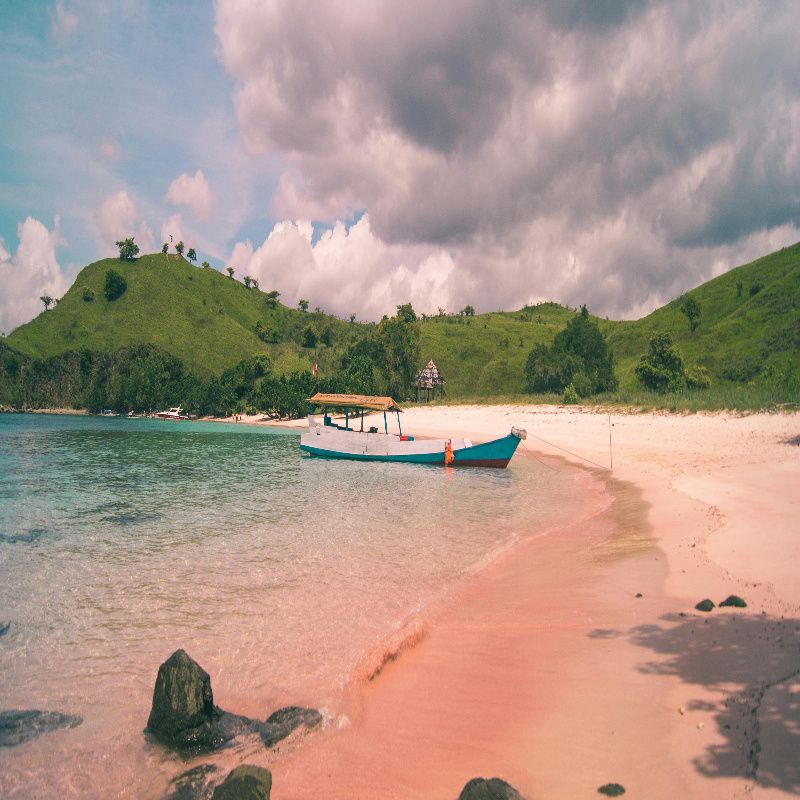
Best time to visit Caribbean pink sand beaches
In broad terms, many Caribbean islands see their most comfortable and popular conditions from roughly late autumn through spring, when temperatures are warm but not overwhelming and the risk of major storms is lower. That said, each destination has its own nuances. For example, the Bahamas often pair well with winter and early spring travel, while Antigua and Barbuda can feel particularly dreamy from about November to April, when humidity eases and sea conditions are typically pleasant.
Hurricane season, usually spanning late summer into early autumn, does not automatically rule out travel, but it does require a bit more flexibility and good travel insurance. If your main goal is to walk in the dark along a pink shoreline without worrying about sudden downpours or rough seas, choosing a shoulder season month with historically calmer weather can be a sensible compromise. At the same time, these less busy periods may give you quieter beaches and better chances of having long sections of sand almost to yourself.
Matching beaches to your travel style
Different pink sand beaches suit different kinds of travelers. Harbour Island, with its boutique hotels, pastel cottages, and well-developed tourism infrastructure, tends to appeal to couples, honeymooners, and travelers who like comfort with a touch of luxury. Barbuda, by contrast, often feels better suited to people who value seclusion, simple stays, and nature-focused days where time is measured by the angle of the sun rather than by a schedule of activities.
Barbados sits somewhere in the middle. Crane Beach and the surrounding area offer a mix of resort comfort and dramatic scenery, with the option to head into more bustling parts of the island when you want restaurants, nightlife, or cultural experiences. If you find yourself unsure which way to lean, it can help to imagine your perfect evening: are you picturing a quiet, starlit walk followed by a glass of wine on a peaceful terrace, or a sunset stroll that ends with live music and a busy beachfront bar?
Where to stay near pink sand beaches
Staying within walking distance of the beach makes it far easier to enjoy the shoreline after dark without worrying about late-night transportation. On Harbour Island, a range of boutique properties and rental homes sit just behind the dunes or a short golf cart ride away, meaning you can head out for a midnight walk almost on a whim. Many travelers say that being able to slip down to the water for ten minutes before bed ends up feeling more valuable than any single day excursion.
In Barbuda, accommodation tends to be more spaced out and intimate, often emphasizing nature and simplicity over big resort complexes. It can be worth asking in advance how easy it is to access the beach after dark, and whether there are any local guidelines about walking alone at night. In Barbados, staying at or near the properties above Crane Beach, or within a short drive, gives you both the dramatic coastal views and the option of returning to a comfortable base after evenings spent listening to the surf below.
Photography and “flow” moments from sunset to night
Even if you are not a dedicated photographer, it is natural to want to capture at least a few images of pink sand under changing light. Sunset and the hour that follows often create the most interesting scenes: the sky shifts through oranges, purples, and deep blues, while the sand cycles through its own sequence of tones from bright blush to soft grayish rose. Standing there, you might notice that the best photos often come when you stop fussing with settings and just respond to what the scene is giving you.
Simple tips for low-light beach photos
In low light on the beach, a few basic habits go a long way. Holding your camera or phone as steady as possible, bracing your elbows against your body, and using any available railing, rock, or towel to support your hands can help keep images sharp without needing complicated gear. Turning off your flash when you are close to other people, and letting the natural twilight do the work, usually creates a softer and more honest look that matches how the moment feels.
If you do enjoy photography, you might experiment a little: slower shutter speeds to blur the waves into a misty surface, silhouettes of palm trees or cliffs against a fading sky, or reflections of the last light in small pools left by the tide. At the same time, it is worth remembering that the deepest sense of flow often arrives when you put the camera away. Letting yourself walk, listen, and breathe without thinking about framing can make the later memories feel fuller, even if you come home with fewer actual pictures.
Capturing bioluminescent or starry nights
If your itinerary includes a bioluminescent bay, check in advance whether photography is even recommended, since some operators prefer guests to focus on the experience rather than bright screens or flashes. When it is allowed, very gentle, respectful shooting with the lowest possible light can sometimes pick up faint streaks or patches of glow where the water is disturbed. With the naked eye, though, the effect is often easiest to appreciate by simply dragging your fingers through the water or watching fish leave trails of light as they dart away.
Even without bioluminescence, a dark Caribbean night above a pink sand beach can be a beautiful setting for stargazing. If the sky is clear and light pollution is low, you may see the Milky Way stretching overhead, or at least a dense scattering of stars that feels far beyond what most city dwellers are used to. Lying back on a towel, with the sound of the ocean in the background and the sand cooling under your shoulders, is one of those simple experiences that can stay with you long after the specifics of your itinerary have faded.
Responsible travel on fragile pink shorelines
Pink sand beaches exist because of delicate systems offshore: coral reefs, seagrass beds, and countless tiny creatures that live, die, and eventually become the subtle pastel hues under your feet. Those systems are under pressure from climate change, pollution, and careless tourism, which means each visitor has a small but real opportunity to help, or to harm. Thinking about this does not have to dampen your enjoyment; if anything, it can make each step feel more meaningful.
Practical steps are mostly simple. Using reef-safe sunscreen reduces the chemical load that washes into nearshore waters, especially in areas where people swim right above coral heads. Staying off dunes and marked nesting areas protects birds and turtles that rely on quiet, undisturbed sand. And resisting the urge to take shells or handfuls of sand home — something that is explicitly restricted in some destinations — helps keep these beaches looking and functioning as they should.
Supporting eco-minded local businesses also makes a difference. Choosing guides and operators who limit group sizes, avoid disturbing wildlife, and follow local regulations channels your travel budget toward people who are trying to protect the coastline rather than simply extract from it. Over time, that kind of support can help ensure that pink sand beaches remain not only beautiful but genuinely alive, both ecologically and culturally.
Linking your journey: pink sand, photography, and glowing nights
If this guide is the starting point for your planning, it can be helpful to think of it as the hub of a broader set of resources you might explore. When you want to compare romantic spots specifically, a focused guide to the best Caribbean pink sand beaches for couples and honeymooners can help you refine your shortlist and weigh details like privacy, dining options, and how easy it is to wander out for an evening walk. That kind of article might sit at a URL like best-caribbean-pink-sand-beaches, acting as a deeper dive into destinations briefly touched on here.
If you find yourself particularly drawn to the mood and look of these places, you may also want a dedicated guide to photographing pink sand beaches from sunset into night. A resource along the lines of photograph-pink-sand-beaches-at-night could walk through framing ideas, simple techniques, and ways to balance getting good shots with staying present in the moment. That kind of cluster article would complement what you have read here, giving you more practical tools for capturing what you feel.
Finally, if the idea of glowing water has captured your imagination, a separate guide to bioluminescent bays in the Caribbean — perhaps at bioluminescent-bays-in-the-caribbean can help you add that extra layer to your itinerary. Putting these pieces together turns a simple beach holiday into a kind of journey through different kinds of light: pastel sand under the sun, deep colors and long shadows at dusk, and either stars or bioluminescent sparks once the night fully arrives.
Conclusion: finding your flow in dark caribbean pink sand beach escapes
In the end, what stays with most people is not just the color of the sand, but the feeling of time slowing down as they walk along the shore in the dark. A flow in dark Caribbean pink sand beach experience is rarely about big, dramatic moments; it is about repeated, gentle ones — the steady rhythm of the waves, the changing texture under your feet, the way the night air smells slightly different after the sun has been gone for a while.
Whether you choose Harbour Island’s polished charm, Barbuda’s sweeping solitude, or Barbados’s blend of history and drama, the key is giving yourself enough unstructured time to simply be there. Let the evenings remain a little open-ended. Wander, sit, listen. The science, the planning, and the photography tips all matter, of course, but the real magic lies in those quiet stretches where you realize you are not checking the time anymore — you are just moving with the tide, one slow step at a time.