
Why Ayia Napa’s Beaches Stand Out
Ayia Napa beaches consistently rank among Europe’s finest due to exceptional sand quality, remarkable water clarity, comprehensive Blue Flag facilities, and unmatched entertainment options. The area holds 8 Blue Flag beaches, confirming world-class standards for water quality and safety.
What sets Ayia Napa apart from other Mediterranean beach destinations is perhaps the consistency. Beach after beach delivers that same fine golden sand, the same remarkably clear turquoise water, and the same high standard of facilities. It’s rare to find such quality maintained across multiple beaches in close proximity—usually, you get one or two standout beaches and then a drop-off in quality. Here, even the lesser-known beaches maintain impressive standards.
The water clarity deserves particular mention. On calm days, which are frequent, you can see the sandy bottom even when you’re chest-deep. This clarity isn’t just aesthetically pleasing—it creates ideal conditions for swimming, snorkelling, and those Instagram photos that make friends jealous. The combination of fine sand that doesn’t cloud the water and the Mediterranean’s natural clarity produces genuinely spectacular conditions.
Accessibility is another factor. A well-maintained coastal promenade connects most major beaches, meaning you can literally walk from one beach to another, stopping at cafés and restaurants along the way. This connectivity encourages exploration—you’re not committing to one beach for the entire day, which removes that pressure of choosing “the perfect beach” each morning.
Understanding Ayia Napa’s Beach Layout
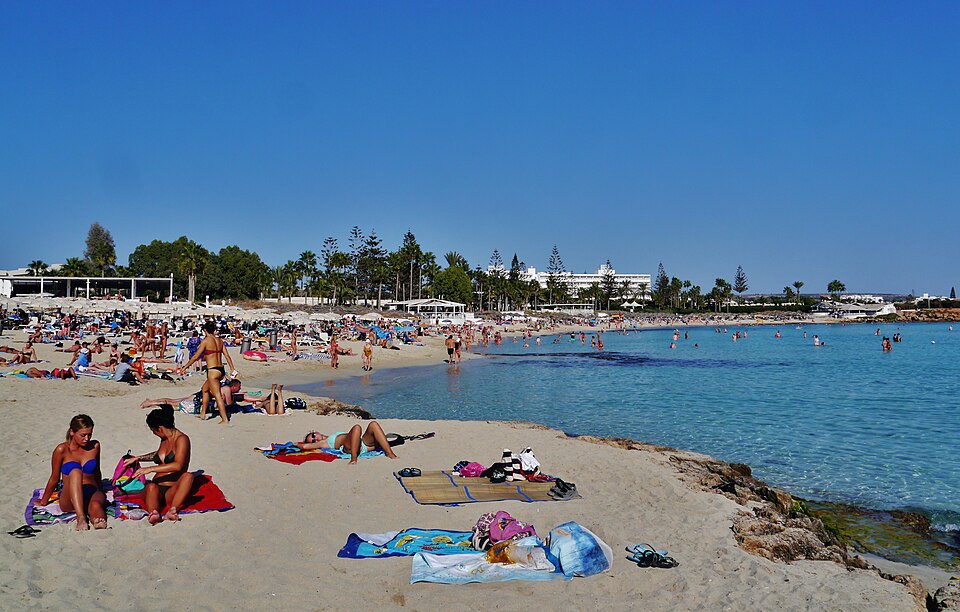
Ayia Napa’s beaches stretch from Grecian Bay in the east to Sandy Bay in the west, with Nissi Beach positioned centrally approximately 2 kilometres from Ayia Napa harbour. Most beaches cluster within easy walking or short driving distance from the main resort area.
The eastern beaches—Grecian Bay, Vathia Gonia, Pantachou—tend towards quieter atmospheres. These are where you’ll find couples seeking peaceful sunbathing and families wanting calm waters without the party scene. Moving west towards the centre, beaches become progressively livelier, culminating in Nissi Beach which anchors the party zone.
West of Nissi, you encounter Makronissos and then eventually Sandy Bay, which swings back towards quieter territory though for different reasons—Sandy Bay’s remoteness and naturist tradition naturally create a more secluded atmosphere. Understanding this west-to-east progression helps enormously when planning your beach days.
Nissi Beach: The Iconic Party Beach
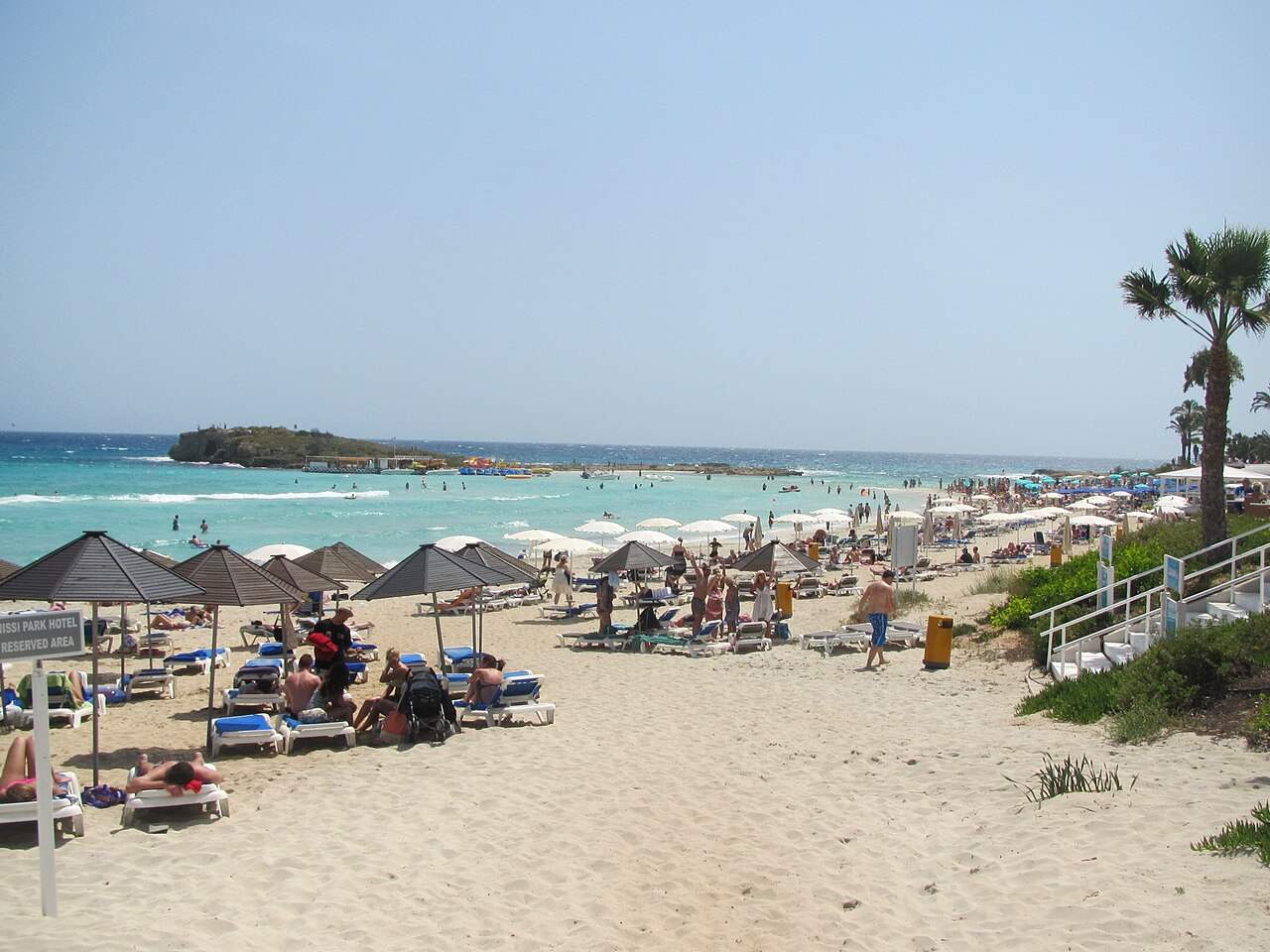
Nissi Beach combines stunning natural beauty with Cyprus’s most intense party atmosphere, featuring white powdery sand, a photogenic offshore island, and beach clubs operating from noon until sunset with live DJs and constant music. The beach spans approximately 500 metres and attracts thousands of visitors daily during peak season.
When people imagine Cyprus beach parties, they’re picturing Nissi. The beach has achieved almost legendary status in European party circuits, and during summer months, it absolutely lives up to its reputation. Beach bars transform into open-air clubs around midday, with DJs spinning dance and electronic music that continues until sunset. The atmosphere is electric—people dancing on the sand, beach volleyball tournaments, that constant buzz of energy that party seekers crave.
But here’s what often surprises first-time visitors: Nissi Beach is genuinely beautiful even without the party element. The sand is exceptionally fine—almost powder-like—and that distinctive bright white colour that photographs brilliantly. The water achieves that perfect turquoise clarity, and that small island sitting perhaps 50 metres offshore creates an iconic visual. At low tide, you can wade across to the island on a narrow sandy strip, which feels rather special even if you’re not particularly interested in the party scene.
The offshore island, locally called Nissi Island though that’s somewhat redundant since “nissi” means island in Greek, provides a focal point for the beach. Swimming out to it takes just a few minutes for confident swimmers, and standing on the island looking back at the beach gives you appreciation for how scenic the setting actually is. The island is quite small—you can walk around it in perhaps two minutes—but it’s become an Instagram favourite, with countless photos featuring people posing on its rocks.
Nissi Beach Facilities and Practical Information
Nissi Beach offers comprehensive facilities including sunbed rentals (€7.50 per set), multiple beach bars and restaurants, changing rooms, showers, lifeguards, and extensive water sports activities in Cyprus. The beach maintains Blue Flag status and operates full facilities from April through October.
Sunbed and parasol hire is straightforward—around €7.50 gets you both for the day, which is reasonable by European beach standards. The beach gets busy, genuinely packed during July and August, so arriving before 10am makes sense if you want prime positioning near the water. After 11am, finding two sunbeds together becomes increasingly challenging.
Water sports dominate Nissi’s offerings. Jet skiing starts around €40 for 15 minutes, parasailing runs €60-80 depending on height and duration, banana boat rides cost approximately €25 per person. Wakeboarding, pedal boats, stand-up paddleboarding—essentially every water-based activity you can imagine operates here. The operators are professional, safety briefings are thorough, and equipment appears well-maintained. It’s not cheap, but the quality justifies the prices.
The beach bars deserve mention. Several operate along Nissi Beach, each with slightly different vibes. Some focus on music and dancing, others emphasise cocktails and lounging. Most serve food ranging from simple snacks to full meals, though quality varies—you’re here for atmosphere rather than culinary excellence. Prices reflect the location: expect €8-12 for cocktails, €15-20 for main courses.
When to Visit Nissi Beach
Visit Nissi Beach early morning (before 10am) or late afternoon (after 5pm) for quieter conditions, or arrive between 1-4pm to experience peak party atmosphere. September offers ideal conditions with warm weather but reduced crowds compared to July-August.
Timing dramatically affects your Nissi Beach experience. Early morning—say 8-10am—the beach is remarkably peaceful. The sand is pristine from overnight cleaning, the water glass-calm, and you might have entire sections nearly to yourself. It’s a completely different beach from the afternoon chaos, and I think many visitors would be surprised by how pleasant Nissi can be during these quiet hours.
The party atmosphere builds gradually. Music starts around 11am, volume increasing through midday until by 2pm you’re fully immersed in that beach club environment. Peak intensity hits roughly 2-4pm when the beach is at maximum capacity and energy levels are highest. If this is what you’re after—and many visitors absolutely are—this window delivers spectacularly.
Late afternoon, perhaps 5pm onwards, things calm again. The beach empties somewhat as people head back to hotels to prepare for evening plans. The light becomes beautiful—that golden hour photographers love—and swimming at this time feels lovely after the day’s heat. The water retains warmth, and without the midday crowds, you can actually appreciate the beach’s natural beauty.
Makronissos Beach: The Family Alternative
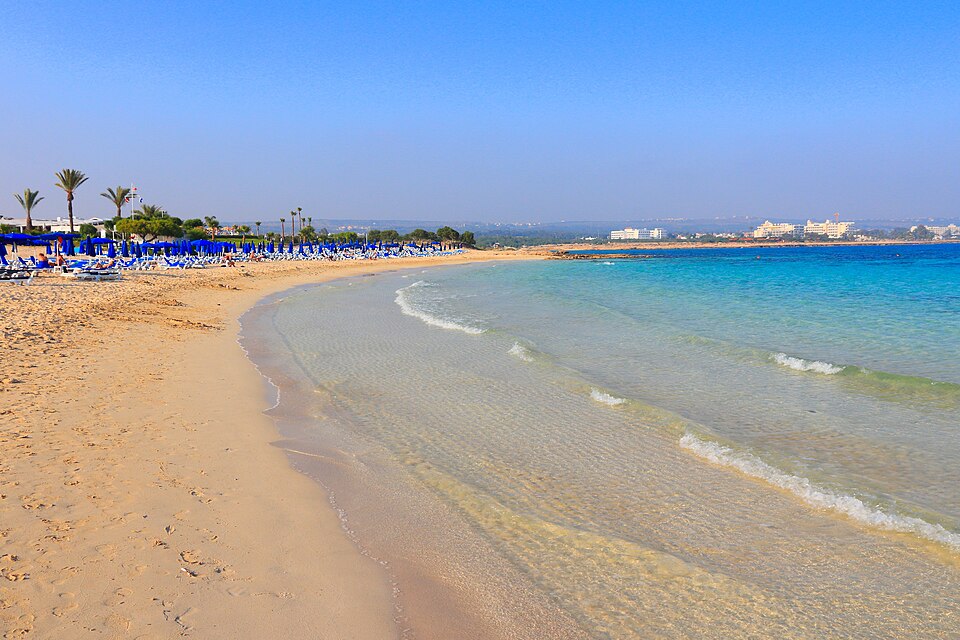
Makronissos Beach comprises three consecutive sandy coves totalling approximately 500 metres, offering Nissi-quality sand and water but with notably calmer atmosphere making it ideal for families and couples. The beach maintains excellent facilities whilst avoiding intense party scenes.
Located about 1.5 kilometres west of Nissi, Makronissos often feels like Nissi’s more mature sibling. You get comparable sand quality—that same fine golden texture—and equally clear water, but the atmosphere shifts noticeably. Beach bars exist but play music at conversation-friendly volumes. Water sports are available but less aggressively marketed. The overall vibe feels more balanced towards actual beach relaxation rather than constant entertainment.
The three coves that form Makronissos each have distinct characteristics. The main central cove is largest and most developed, with comprehensive facilities and the most concentrated amenities. This cove attracts the biggest crowds but still never reaches Nissi’s intensity levels. The eastern cove, smaller and slightly more secluded, tends to attract couples and quieter groups. The western cove is smallest but often the most peaceful of the three, with fewer facilities but consequently fewer people.
What I particularly appreciate about Makronissos is its versatility. Family-friendly options cluster at one end where the water stays particularly shallow—children can paddle and play safely whilst parents relax nearby. Couples often prefer the quieter eastern cove. Groups of friends might choose the central area for better bar access. The beach is spacious enough that everyone finds their spot without feeling cramped, even during busy August days.
Makronissos Historical Context
The Makronissos area contains ancient tombs dating to Hellenistic and Roman periods (4th century BC to 4th century AD), adding unexpected archaeological interest to beach visits. The Makronissos Tombs archaeological site sits just inland from the beach.
This historical layer adds dimension to what could otherwise be just another pretty beach. The tombs—19 rock-cut chambers—were part of an ancient necropolis, and whilst most visitors focus entirely on the beach itself, the archaeological site offers fascinating glimpses into Cyprus’s ancient past. It’s quite something to think you’re sunbathing near 2,000-year-old burial sites.
The small chapel of Agia Thekla, also nearby, dates to Byzantine times and sits picturesquely on a rocky outcrop overlooking the sea. You can visit both the tombs and chapel easily if you fancy a break from beach time—the walk takes perhaps 15 minutes, and it provides interesting cultural context that many beach destinations lack.
Konnos Bay: The Snorkelling Paradise
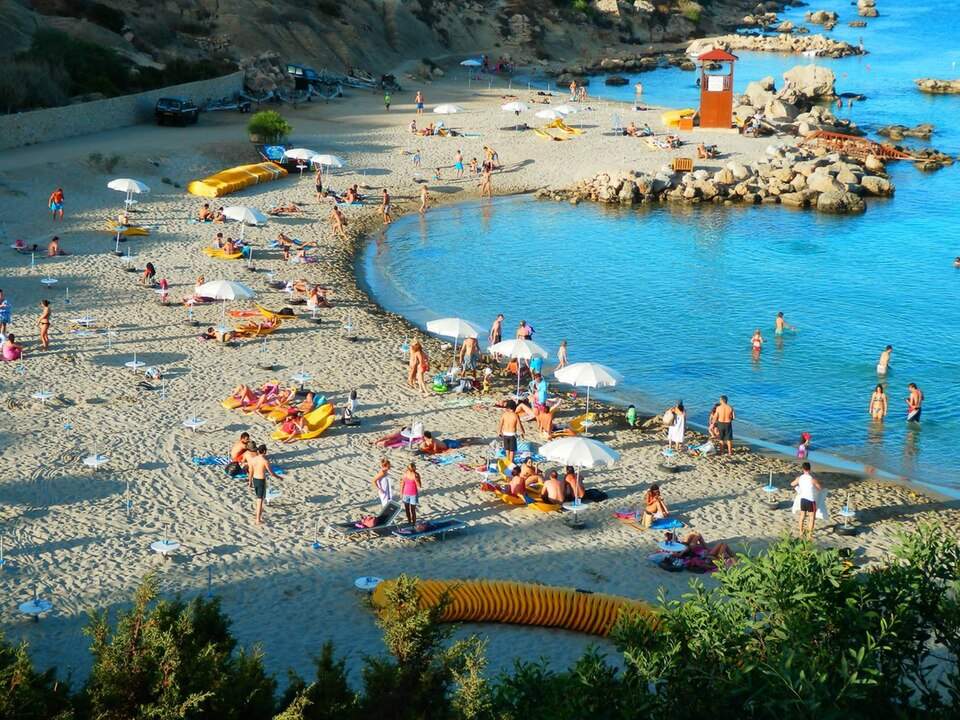
Konnos Bay, positioned between Ayia Napa and Protaras, offers the area’s premier snorkelling with rocky underwater formations, diverse marine life, small caves, and exceptional water clarity. The bay’s pine-forest backdrop creates one of Cyprus’s most scenic beach settings.
Technically Konnos Bay straddles the boundary between Ayia Napa and Protaras beaches, but it’s accessible from both and deserves inclusion in any thorough Ayia Napa exploration. The bay sits tucked into the coastline, surrounded by dramatic limestone cliffs that plunge down to meet turquoise water. Pine trees cover the surrounding hills, creating a rather dramatic setting that feels more rugged than typical east coast beaches.
What distinguishes Konnos is the underwater environment. The bay’s centre features sandy bottom ideal for swimming and general beach activities, but around the edges, particularly along the northern and southern rocky sections, you’ll find surprisingly diverse marine life. Bring snorkelling gear—available for hire if you don’t have your own—and you’ll encounter various fish species including colourful wrasse, occasional sea bream, damselfish darting between rocks, and if you’re observant, small octopuses tucked into rocky crevices.
The water clarity here consistently impresses. On calm days, which are frequent given the bay’s sheltered position, underwater visibility extends for many metres. This creates ideal conditions for snorkelling and underwater photography. Even if you’re just swimming, being able to see the bottom clearly adds to the experience—there’s something reassuring about knowing exactly what’s beneath you.
Konnos Bay’s Underwater Features
Konnos Bay’s rocky areas harbour sea urchins, various fish species, occasional octopuses, and small underwater caves accessible to experienced swimmers. The bay’s sheltered position ensures calm conditions most days, making it suitable for novice snorkellers.
The small caves around the bay’s edges appeal to more adventurous swimmers. These aren’t massive cave systems—more like rocky overhangs and shallow indentations—but they’re fun to investigate. You’ll want to be cautious of currents near the cave entrances, and obviously, only explore if you’re a confident swimmer. But for those comfortable in water, they add an element of exploration that standard beach swimming lacks.
Sea urchins cluster on rocks, particularly in the shallower areas. They’re not dangerous if you’re careful—just watch where you’re putting your hands and feet when exploring rocky sections. Their presence actually indicates good water quality; sea urchins thrive in clean, oxygen-rich water.
Konnos Bay Practical Details
Konnos Bay offers sunbed hire, a quality taverna serving fresh fish, toilets and showers, and natural pine forest shade. The beach is accessible by car with parking available, or via coastal walking path from either Ayia Napa or Protaras.
The taverna at Konnos Bay deserves specific mention. It’s family-run, serves genuinely good fresh fish and traditional Cypriot dishes, and the setting—overlooking the bay from a slightly elevated position—is lovely. Prices are reasonable, certainly less than tourist-heavy restaurants in central Ayia Napa. Having a proper lunch here, perhaps with fresh sea bream or calamari, enhances the day considerably.
The pine forest behind the beach provides blessed natural shade. During August when temperatures regularly exceed 35°C, this shade becomes genuinely valuable. You can position yourself under trees rather than relying entirely on parasols, and the shade remains consistent throughout the day unlike umbrella shade which shifts as the sun moves.
Landa Beach: Central Convenience
Landa Beach (also called Golden Beach) sits in central Ayia Napa just 200 metres from the harbour, offering convenient access, good facilities, and moderate atmosphere—neither party-intense nor overly quiet. It’s ideal for visitors wanting easy beach access without the journey to Nissi or Makronissos.
Location is Landa’s primary advantage. If you’re staying in Ayia Napa town centre, you can walk to Landa in 5-10 minutes from most hotels. This convenience makes it perfect for spontaneous beach visits—a couple of hours in the morning before exploring inland, or late afternoon swimming after spending the day sightseeing. You don’t need to commit to a full beach day or arrange transport.
The beach itself is relatively small, perhaps 200 metres of coastline, which during peak season means it fills up quickly. Arriving by 10am is advisable if you want prime positioning. But the compact size also creates an intimate atmosphere that some visitors prefer over sprawling beaches where you might feel lost among thousands of people. There’s something rather pleasant about a beach where you can see both ends clearly.
Sand quality matches the Ayia Napa standard—fine, golden, clean. The water is equally clear and typically calm. The beach slopes gently into the sea, making it suitable for families with children. Shallow water extends quite far from shore, allowing children to paddle and play safely whilst remaining easily supervised.
Landa Beach Facilities
Landa Beach provides sunbed rentals, two beach bars, toilets, showers, and lifeguard service during summer months. Numerous restaurants line the road immediately behind the beach, offering varied dining options.
The proximity to restaurants is genuinely convenient. Rather than being confined to limited beach bar menus, you have perhaps a dozen restaurants within two-minute walk. This means you can choose based on what you fancy—traditional Cypriot, Italian, seafood, whatever appeals—rather than accepting whatever the beach bar serves. For longer beach days, this variety becomes quite valuable.
Sandy Bay: The Naturist Haven
Sandy Bay functions as Ayia Napa’s unofficial naturist beach, located 2 kilometres west of Nissi Beach and requiring a 15-20 minute coastal walk to reach. The beach offers secluded conditions for clothing-optional sunbathing with minimal facilities.
Whilst public nudity isn’t officially permitted in Cyprus, Sandy Bay has become accepted for naturist use through decades of tradition. The beach’s location—requiring deliberate effort to reach via walking path from the main coastal road—means it’s frequented primarily by those specifically seeking naturist options rather than accidental visitors who might be uncomfortable.
The walk to Sandy Bay passes through undeveloped coastal land that feels remarkably wild considering your proximity to Ayia Napa’s resort area. You’ll traverse rocky sections, pass through low vegetation, and eventually descend to the beach. It’s not difficult walking, but you’ll want decent footwear rather than flip-flops.
Sandy Bay itself comprises pleasant golden sand, clear water, and reasonable size—perhaps 300 metres of coastline. The bay’s orientation provides some natural shelter, keeping conditions typically calm. Facilities are minimal: no sunbed hire, no beach bars, no formal amenities. Most visitors bring their own supplies for the day—umbrellas, coolers, whatever they need. This lack of commercialisation is part of Sandy Bay’s appeal for regulars; it maintains a natural, unspoilt character.
Grecian Bay: The Peaceful Option
Grecian Bay Beach offers Ayia Napa’s most tranquil atmosphere, located at the eastern end of the resort with soft golden sand, calm shallow waters, and notably fewer crowds than central beaches. It’s ideal for visitors seeking quality beach conditions without party scenes.
Grecian Bay (sometimes called Glyki Nero Beach, meaning “sweet water”) represents the opposite end of the spectrum from Nissi. The beach maintains the same sand quality and water clarity that characterises all Ayia Napa beaches, but the atmosphere is decidedly peaceful. No beach bars pumping music, no water sports operators constantly offering activities, no crowds of party-seekers. Just a proper beach experience focused on swimming, sunbathing, and relaxation.
The beach stretches for approximately 300 metres, backed by some of Ayia Napa’s more upmarket hotels. This contributes to the quieter atmosphere—hotel guests tend towards couples and families rather than party groups. The clientele affects the vibe considerably; you’ll find more people reading books and having quiet conversations than playing beach volleyball or dancing to music.
Water conditions at Grecian Bay are consistently excellent. The bay’s orientation provides shelter from most winds, keeping the sea calm even when other beaches experience choppier conditions. The water stays shallow for quite a distance from shore—children can paddle safely, and even less confident swimmers feel comfortable here.
Ammos Tou Kambouri: The Local Favourite
Ammos Tou Kambouri beach sits between Nissi and the harbour, offering a more local atmosphere with good facilities but fewer international tourists. The beach features fine sand, clear waters, and several quality tavernas serving traditional Cypriot food.
This beach doesn’t feature prominently in most tourist guides, which partly explains its more authentic feel. You’ll encounter more Cypriot families here, particularly during weekends and evenings when locals head to the beach after work. This creates a different dynamic—less tourist-oriented, more genuinely reflective of how Cypriots themselves enjoy beaches.
The tavernas here serve notably better food than typical tourist-focused beach bars. Family-run establishments offering proper Cypriot meze, fresh fish, traditional dishes prepared the way locals prefer rather than adapted for tourist tastes. Prices are also more reasonable—perhaps 20-30% less than equivalent restaurants in tourist-heavy areas.
Water Sports Activities Across Ayia Napa Beaches
Ayia Napa beaches offer comprehensive water sports activities including jet skiing (€40-50 per 15 minutes), parasailing (€60-80), banana boats (€25 per person), wakeboarding (€50-70), and stand-up paddleboarding (€15-20 per hour). Nissi Beach and Makronissos provide the widest activity range.
The water sports infrastructure in Ayia Napa is comprehensive and professional. Operators are licensed, equipment appears well-maintained, and safety standards are high. Staff provide proper briefings before activities, and safety equipment—life jackets, wetsuits where needed—is provided as standard.
Jet skiing remains one of the most popular activities. You’ll typically ride two to a jet ski unless you pay for solo riding, which costs more. Fifteen minutes provides enough time to get comfortable and enjoy the experience without feeling rushed. The designated jet ski areas keep riders away from swimmers, which improves safety for everyone.
Parasailing offers spectacular views of the coastline. You’re lifted perhaps 50-100 metres above the water—higher if you pay premium rates—providing amazing perspectives of the beaches and surrounding area. The experience lasts roughly 10-15 minutes including take-off and landing, with perhaps 8-10 minutes at full height. It’s exhilarating without being terrifying, suitable for most people who don’t have serious height fears.
Best Times to Visit Ayia Napa Beaches
June and September offer ideal Ayia Napa beach conditions with warm temperatures (26-30°C), pleasant sea temperatures (24-26°C), and significantly fewer crowds than July-August peak season. May and October provide good conditions for budget-conscious visitors willing to risk occasional cooler days.
Peak season—July and especially August—delivers guaranteed hot weather but also maximum crowds and highest prices. Beaches like Nissi become genuinely packed, with every sunbed occupied and sand space at premium. If you thrive in busy, energetic environments and want the full Ayia Napa party experience, peak season delivers spectacularly. But if crowds stress you, consider shoulder season instead.
September particularly appeals because the sea has retained summer warmth—around 26°C, which feels bathwater-comfortable—whilst air temperatures become slightly more moderate at 28-30°C. Crowds thin considerably once school terms restart across Europe, yet beach facilities continue operating normally. September arguably provides the sweet spot for many visitors.
Early season—May and even April—sees fewer visitors and considerably lower prices. The sea is cooler, around 20-22°C, which feels refreshing rather than warm. Not everyone enjoys this, but if you’re used to cooler waters or don’t mind less bath-like temperatures, early season offers excellent value. Plus, spring flowers bloom across Cyprus during this period, creating beautiful coastal scenery.
Getting to Ayia Napa Beaches
Most Ayia Napa beaches are accessible via the coastal promenade on foot, by local bus (routes 101, 102 connect main beaches), or by taxi (€5-10 from town centre to most beaches). Car rental provides maximum flexibility for exploring multiple beaches.
The coastal promenade makes walking between beaches genuinely pleasant. Well-paved, mostly flat, with sea views throughout, the walk from Ayia Napa harbour to Nissi Beach takes perhaps 25-30 minutes at leisurely pace. You’ll pass numerous cafés and restaurants, making it easy to stop for refreshments. Many visitors walk to one beach, spend the day there, then taxi back if they’re tired—this combines exercise with convenience.
Local buses operate regularly during summer, running routes that specifically service popular beaches. Fares are inexpensive—€1.50-2 per journey—and buses are air-conditioned, which provides welcome relief during hot weather. Timetables are available at hotels and online, though services reduce considerably outside peak season.
Hiring a car makes perfect sense if you’re planning to explore beyond Ayia Napa or want flexibility to visit multiple beaches. Parking is available at all major beaches, either in designated car parks or along access roads. Early arrival secures parking more easily; by midday during peak season, finding spaces becomes challenging.
What to Bring to Ayia Napa Beaches
Essential items include high-SPF sunscreen (factor 50+ recommended), plenty of water, towels, swimming costume, sunglasses, and cash for sunbed hire and refreshments. Snorkelling gear enhances visits to Konnos Bay and rocky beach areas.
Sunscreen cannot be overstated. The Cyprus summer sun is genuinely intense—you’ll burn faster than you expect if you’re not careful. Factor 50 is advisable, and reapplication every couple of hours is essential, not optional. The combination of sun intensity, reflective water, and extended beach time creates conditions where even normally cautious people can burn.
Water consumption needs increase considerably in heat. Bring more water than you think you’ll need—dehydration happens surprisingly quickly. Beach bars sell water, but prices are inflated; bringing your own supplies from supermarkets saves money and ensures you have enough.
If you’re planning to snorkel at Konnos Bay or explore rocky areas, bringing your own mask and snorkel makes sense. Rental equipment is available, but having your own means you can snorkel whenever you want without queuing or paying rental fees. Plus, using your own equipment is more hygienic.
Ayia Napa Beach Safety
All major Ayia Napa beaches employ lifeguards during summer months (typically 10am-6pm), maintain Blue Flag safety standards, and feature clear warning flag systems. Jellyfish occasionally appear in late summer but rarely pose serious danger.
Cyprus beaches maintain good safety records. Lifeguards are professional, equipment is modern, and response procedures are well-established. Warning flags indicate conditions: green means safe, yellow urges caution, red prohibits swimming. Respect these flags—they’re not suggestions.
Jellyfish appear occasionally, particularly during warmer periods in late summer. Most species in Cyprus waters are relatively harmless—stings are painful and irritating rather than dangerous. If jellyfish are present, beaches typically post warnings. Vinegar helps relieve jellyfish stings; many beaches keep supplies specifically for this purpose.
The sun represents perhaps the biggest safety concern. Heatstroke and severe sunburn are genuine risks during Cyprus summers. Take breaks in shade, maintain hydration, use adequate sunscreen, and wear hats during peak sun hours (roughly 11am-3pm). These aren’t excessive precautions—they’re necessary for comfortable, safe beach days.
Planning Your Ayia Napa Beach Experience
Allocate at least 3-4 days to properly explore Ayia Napa’s beach variety, mixing high-energy beaches like Nissi with calmer options like Grecian Bay and snorkelling at Konnos Bay for balanced coastal experiences.
The beauty of Ayia Napa’s beach scene lies in its diversity. You can genuinely experience different beach atmospheres—party vibes one day, peaceful relaxation the next, snorkelling adventures another—without leaving the local area. This makes Ayia Napa particularly good for longer stays where you want variety without constantly moving accommodation.
My suggestion would be to sample different beaches rather than committing to one favourite. Perhaps Nissi for the full party experience, Makronissos for comfortable all-day beach time with good facilities, Konnos Bay for snorkelling and natural scenery, Grecian Bay for peaceful afternoons. Each beach reveals different aspects of what Ayia Napa offers, and collectively they create a more complete coastal experience than any single beach could provide.
The coastal setting, combined with that consistent quality across multiple beaches, makes Ayia Napa rather special. Yes, it’s developed and commercial and sometimes overwhelmingly busy. But the beaches themselves—that sand, that water, those facilities—deliver exactly what they promise. And sometimes, that’s precisely what you want from a beach holiday.