
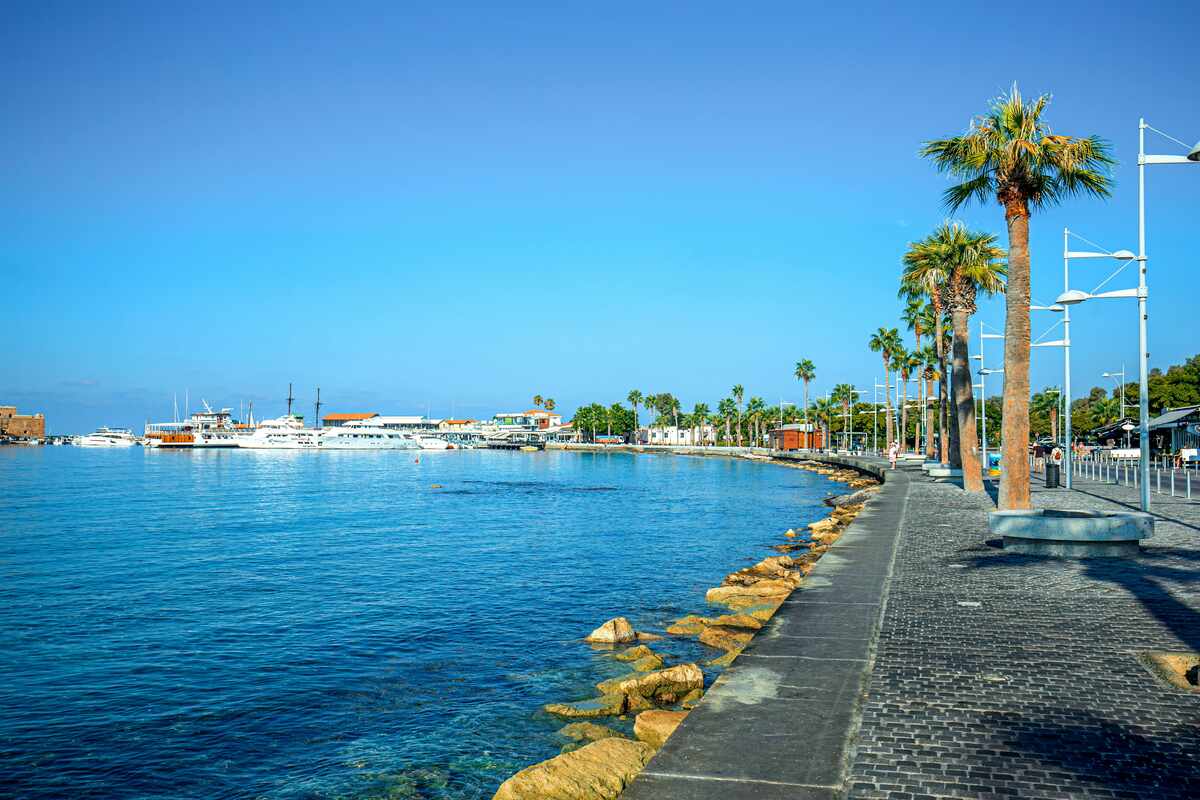
Understanding Paphos’s Coastal Character
Paphos’s western coastline features more varied beach types than eastern Cyprus, including sandy bays, pebble beaches, rocky coves, and protected natural areas. The region emphasises conservation and natural beauty over intensive development, creating calmer, more authentic coastal experiences compared to major resort areas.
The western coast developed later for tourism than areas like Ayia Napa, which meant different priorities shaped development patterns. Rather than maximising beach access and facilities at any cost, Paphos has maintained—sometimes deliberately, sometimes through geography—more natural coastlines. Parts of the coast, particularly the Akamas Peninsula, remain protected areas where development is restricted or prohibited entirely.
This creates interesting contrasts within relatively short distances. Coral Bay represents developed resort beach territory with comprehensive facilities, crowds during summer, and all the amenities you’d expect. Drive 20 kilometres north, and Lara Bay feels almost wilderness-like—accessible only by rough tracks, virtually no facilities, and protected status prioritising turtle conservation over tourist convenience. Both are Paphos beaches, yet they offer completely different experiences.
The archaeology adds unexpected dimension to beach visits. Aphrodite’s Rock isn’t just a pretty photo opportunity—it’s genuinely embedded in Greek mythology as the goddess’s birthplace. The Tombs of the Kings archaeological site sits metres from the sea. Ancient harbour ruins at Paphos harbour connect directly to coastal areas. You’re swimming in waters that ancient Greeks, Romans, and Byzantines knew, which creates rather wonderful historical continuity if you appreciate such connections.

Coral Bay: Paphos’s Premier Beach
Coral Bay, located 12 kilometres north of Paphos, ranks as the region’s most popular beach with a wide semicircular bay, golden sand, shallow calm waters, and comprehensive facilities including lifeguards, sunbeds, restaurants, and water sports. The beach attracts thousands of visitors daily during peak season, offering Paphos’s most developed and family-friendly coastal experience.
When people think of Paphos beaches, they’re usually picturing Coral Bay. The beach forms this beautiful wide semicircle—roughly 600 metres of golden sand curving around a sheltered bay—framed by rocky headlands at either end. The setting is genuinely picturesque, the sort of view that looks stunning even in mediocre photographs and spectacular when lighting conditions cooperate.
The sand quality at Coral Bay exceeds most other Paphos beaches. It’s fine, golden, and reasonably soft—not quite the powder-like texture of Nissi Beach in Ayia Napa, but considerably better than the pebbles and coarse sand found at many western coast beaches. This makes Coral Bay particularly suitable for family beaches, with sand that’s comfortable for young children and works well for sandcastle construction.
What makes Coral Bay especially appealing for families is how consistently calm conditions remain. The bay’s orientation and those protective headlands mean waves rarely get rough enough to worry about with children. Even on days when exposed beaches experience choppy conditions, Coral Bay typically stays relatively placid. This reliability removes significant stress from family beach days—you know the conditions will be manageable for children regardless of slight weather variations.
Coral Bay Water Temperature and Conditions
Coral Bay’s water temperature averages 1-2°C warmer than east coast beaches, reaching 27-28°C during summer months. The sheltered bay position and western location create slightly warmer conditions particularly noticeable during spring and autumn when the difference becomes more pronounced.
This temperature difference might sound marginal, but it becomes genuinely noticeable, particularly with young children who feel cold more quickly than adults. That extra degree or two means children can stay in water longer, which generally translates to happier children and more relaxed parents. During May and October when sea temperatures hover around 20-22°C at eastern beaches, Coral Bay might reach 22-24°C—enough difference to shift from “refreshing” to “comfortable” for many swimmers.
The shallow water extends quite far from shore, creating extensive areas where children can play safely whilst still being in depths they can manage. You can wade out perhaps 20-25 metres whilst remaining waist-deep or shallower, which provides considerable freedom for children whilst keeping them in manageable depths for supervision.
Coral Bay Facilities and Practical Information
Coral Bay provides extensive sunbed availability (€7.50 per set daily), multiple beach bars and restaurants, clean toilets and showers, lifeguards during summer, water sports including jet skiing and parasailing, and a small playground area. The beach maintains Blue Flag status and operates full services from April through October.
The facilities at Coral Bay are comprehensive, reflecting its position as Paphos’s premier family beach. Multiple sunbed operators work the beach, so you’ve got options and can usually negotiate rates for extended rentals. During peak season—July and August—arriving by 9-10am secures better positioning; after 11am, finding adjacent sunbeds becomes increasingly challenging as the beach fills.
Beach bars and restaurants line the bay, offering everything from quick snacks to full meals. Quality varies considerably—some establishments genuinely care about food standards, others survive purely on location convenience. Generally, restaurants positioned slightly back from the beach rather than directly on the sand tend towards better food quality, though you’re paying for convenience and location rather than culinary excellence regardless.
The small playground area with basic equipment—swings, slides, climbing frames—provides alternative entertainment when children tire of beach play. It’s nothing elaborate, just simple playground equipment, but it serves its purpose, giving children different activities whilst remaining close to the beach. Particularly useful during those late afternoon periods when children have had enough swimming but aren’t ready to leave entirely.
Coral Bay Crowds and Best Times
Coral Bay becomes genuinely crowded during July-August peak season, with the beach often reaching capacity by midday. Visit during June or September for excellent conditions with significantly reduced crowds, or arrive before 9am during peak season to secure good positioning.
The popularity that makes Coral Bay Paphos’s flagship beach also creates its main drawback—crowds. During peak summer, the beach gets genuinely packed. Every sunbed occupied, sand space at premium, that slightly overwhelming feeling of being surrounded by hundreds of people. If you thrive in busy, energetic beach environments, this might not bother you. But if crowds stress you or you’re seeking peaceful beach experiences, peak season Coral Bay will likely disappoint.
September offers ideal conditions—the sea has retained summer warmth at around 26-27°C, air temperatures moderate to 28-30°C, and once European schools restart, crowds thin dramatically. The beach never becomes empty—it’s too good for that—but you can arrive at 10am and find decent spots, which is essentially impossible during July-August.
Early morning visits during any season provide the best Coral Bay experiences. Before 9am, the beach is remarkably peaceful, sand pristine from overnight cleaning, water glass-calm. You might have entire sections nearly to yourself. It’s a completely different beach from the midday chaos, and worth the effort of waking early, particularly if you’re staying nearby.

Lara Bay: The Wilderness Beach
Lara Bay on the Akamas Peninsula provides Cyprus’s most important sea turtle nesting site, accessible only via rough 4×4 tracks or hiking, with pristine natural conditions, no commercial facilities, and protected status prioritising conservation over tourism. The beach offers genuine wilderness experiences for visitors willing to make the journey.
For the complete opposite end of the spectrum from Coral Bay’s developed resort atmosphere, head to Lara Bay. Reaching this beach requires either a four-wheel drive vehicle capable of handling rough tracks or willingness to hike for perhaps 45 minutes from where regular cars must stop. This immediately filters out casual visitors, and honestly, that’s rather the point—Lara Bay is protected precisely because its remoteness has preserved conditions turtles need for successful nesting.
The beach is genuinely beautiful in that unspoilt, natural way that developed beaches can never quite achieve. Golden-brown sand stretches for roughly 800 metres, backed by low dunes and scrubland rather than hotels or restaurants. The water is clear, typically calm given the bay’s sheltered position, and you’re swimming in what feels like wilderness rather than resort territory. There are no sunbeds, no beach bars playing music, no water sports operators. Just sand, sea, and nature.
Turtle Conservation at Lara Bay
Lara Bay hosts nesting sites for both green turtles and loggerhead turtles from May through October, with female turtles returning to lay eggs on the same beaches where they hatched decades earlier. Conservation efforts include marked nesting areas, protective cages over nests, and monitoring programmes tracking hatchling success rates.
The turtle conservation work here is genuinely impressive and worth understanding if you visit. Green turtles and loggerhead turtles—both endangered species—return to Lara Bay every year during breeding season. Female turtles emerge at night to lay eggs in the sand, burying clutches of perhaps 100 eggs before returning to the sea. Roughly 50-60 days later, hatchlings emerge and make their instinctive dash to the water.
The conservation project marks nesting areas with stakes and protective caging, preventing accidental disturbance whilst allowing natural incubation. Information boards explain the turtles’ lifecycle, conservation challenges, and how visitors can help rather than hinder efforts. If you’re lucky enough to witness hatchlings making their way to the sea—typically happening at dawn or dusk—it’s genuinely moving, one of those wildlife experiences that stays with you.
The project operates a small hatchery where eggs from threatened nests are relocated for protected incubation. You can visit the hatchery, learn about conservation techniques, and occasionally see baby turtles before their release. It’s educational without feeling forced, and provides wonderful context that transforms Lara Bay from “just another beach” into something more meaningful.
Lara Bay Practical Considerations
Lara Bay offers minimal facilities—one basic open-air restaurant serving drinks and simple snacks, no sunbed rentals, no formal toilets or changing rooms. Visitors must bring their own supplies including shade equipment, food, water, and be prepared for wilderness beach conditions.
The lack of facilities isn’t oversight—it’s deliberate protection of turtle habitat. Commercial development would compromise nesting success, so Lara Bay remains largely undeveloped beyond the small restaurant and basic information facilities. This means you need to plan properly before visiting.
Bring adequate water—more than you think you’ll need, particularly during summer when temperatures regularly exceed 35°C. Pack food for the day; the restaurant serves basic items but selection is limited and prices reflect the remote location. Bring shade equipment—umbrellas or pop-up tents—as there’s virtually no natural shade on the beach itself. Sun protection is critical; you’re exposed all day with nowhere to escape sun except your own shade.
The journey to Lara Bay requires proper consideration. The track from Agios Georgios (the northern approach) is rough—loose gravel, occasional steep sections, ruts from previous vehicles. Regular cars struggle; you genuinely need 4×4 capability. Allow 30-40 minutes for the drive from Agios Georgios, longer if you’re cautious. Some visitors hire 4x4s specifically for reaching Lara Bay, which makes sense if it’s a priority destination.
Alternatively, boat trips to Lara Bay operate from Paphos harbour and various coastal points. These typically include swimming time at the beach plus stops at other scenic locations like the Blue Lagoon. It’s less adventurous than driving but more relaxing, and you avoid the rough track entirely.
Aphrodite’s Rock (Petra tou Romiou): The Mythological Beach
Aphrodite’s Rock, located approximately 25 kilometres east of Paphos, ranks as Cyprus’s most photographed coastal site, steeped in mythology as the legendary birthplace of Aphrodite and featuring dramatic rock formations rising from the Mediterranean. The beach comprises pebbles rather than sand, with strong currents making swimming challenging but the setting spectacularly scenic.
According to Greek mythology, this is where Aphrodite, goddess of love and beauty, emerged from sea foam. Local legend holds that swimming around the rock grants eternal beauty, though I should mention the currents here can be quite strong—it’s genuinely challenging swimming, not something to attempt casually. The myth is lovely, but the practical realities deserve respect.
The rock formation itself is genuinely impressive—this massive limestone outcrop rising perhaps 15-20 metres from the sea just offshore. The setting, particularly at sunset when the rock silhouettes against the sky and the Mediterranean catches that golden light, creates genuinely stunning photographs. It’s become somewhat iconic of Cyprus, appearing in countless travel brochures and Instagram feeds, and honestly, the reality matches the photographs.

Swimming at Aphrodite’s Rock
Swimming conditions at Aphrodite’s Rock are often challenging with strong currents, waves, and undertows particularly dangerous near the rock formation itself. The beach lacks lifeguards, and several drownings have occurred over years when swimmers underestimated conditions.
The romantic notion of swimming around Aphrodite’s Rock for eternal beauty has unfortunately led to accidents when people underestimate the sea conditions. The currents around the rock can be powerful, particularly on days with any wave action. Undertows occur frequently, and the rocky bottom makes it difficult to find footing if you get into trouble. If you’re not a strong, confident swimmer, admire the rock from the beach rather than attempting to swim to or around it.
The beach itself—away from the rock—offers safer swimming, though conditions still tend rougher than sheltered bay beaches like Coral Bay. The pebble composition means there’s no gradual sandy slope into the water; it drops off relatively quickly, which some swimmers find disconcerting. But on calm days, swimming here is perfectly manageable if you’re reasonably confident in water.
Best Times to Visit Aphrodite’s Rock
Visit Aphrodite’s Rock during late afternoon for optimal photography light, with sunset providing spectacular conditions though parking becomes challenging as tour groups arrive. Early morning offers peaceful conditions with minimal crowds and calm seas more suitable for swimming.
The lighting dramatically affects how the site photographs. Late afternoon and sunset provide the most dramatic conditions, with the rock catching golden light and the water taking on that deep blue-gold colour that photographs beautifully. This is when tour buses arrive, however, so you’ll be sharing the experience with crowds. The trade-off between optimal lighting and dealing with crowds is something each visitor must balance.
Early morning—say 7-8am—offers completely different experiences. The site is largely empty, the sea typically calmer, and you can actually appreciate the setting without navigating through people posing for photographs. The lighting is softer, less dramatic, but the peacefulness compensates considerably if you value solitude over perfect golden-hour photography.
Faros Beach: The Lighthouse Beach
Faros Beach near Paphos lighthouse combines pebble shore with rocky swimming areas, creating popular spots for snorkelling and diving whilst maintaining relatively quiet conditions compared to major resort beaches. The beach offers decent facilities whilst preserving a more natural atmosphere than highly developed alternatives.
Faros takes its name from the nearby lighthouse—”faros” means lighthouse in Greek—which stands prominently at the southwestern edge of Paphos. The beach is less famous than Coral Bay or Aphrodite’s Rock, which translates directly into fewer crowds even during peak season. The composition is mixed pebble and rock rather than sand, which some visitors find less appealing but actually creates better conditions for marine life and consequently better snorkelling.
The rocky sections around the beach edges harbour diverse marine life. Snorkelling here reveals various fish species, sea urchins clustering on rocks, and the clearer water typical of rocky rather than sandy bottoms. It’s not world-class snorkelling—you won’t see coral reefs or tropical fish—but for Cyprus waters, it’s decent, offering more interesting underwater exploration than beaches with purely sandy bottoms.
Faros Beach Facilities
Faros Beach provides basic facilities including a beach bar/restaurant, limited sunbed availability, and toilets, whilst maintaining relatively undeveloped character compared to major resort beaches. The beach attracts both locals and tourists seeking quieter alternatives to crowded resort areas.
The facilities are adequate without being comprehensive. One main beach restaurant serves decent food—fresh fish, traditional Cypriot dishes, cold drinks—at reasonable prices. Sunbeds are available but limited; arriving by late morning often means they’re all occupied. Most visitors bring their own equipment—beach mats, umbrellas—which works fine given the pebble beach makes staking umbrellas straightforward.
The demographic skews more local than major tourist beaches. You’ll encounter Cypriot families, particularly during weekends, which creates more authentic atmosphere. Service at the restaurant is friendly and unhurried, reflecting the local clientele who aren’t rushing between scheduled activities but spending leisurely days at familiar beaches.
Laourou Beach: The Hidden Akamas Gem
Laourou Beach, accessible only by hiking approximately 45 minutes from the nearest vehicle access point, offers complete seclusion with pebble shore, clear waters, and absolutely no facilities. The beach provides genuine wilderness experiences for visitors seeking maximum solitude and natural beauty.
If Lara Bay represents Paphos’s most famous remote beach, Laourou represents its most genuinely isolated accessible beach. Reaching Laourou requires hiking from where vehicles must stop—the track becomes impassable even for 4x4s beyond a certain point. The walk isn’t technically difficult but takes 45 minutes to an hour each way, traversing coastal terrain with minimal shade. You need decent fitness, proper footwear, and serious commitment to reaching this beach.
Why bother? Because Laourou offers complete solitude during most visits. You might have the entire beach to yourself, particularly outside July-August. The pebble shore backed by wild scrubland, clear water, rugged coastal scenery—it feels genuinely remote, like discovering a secret beach despite being marked on maps. There are absolutely no facilities—no restaurant, no toilets, nothing. You carry everything in and must carry all rubbish out.
Planning a Laourou Beach Visit
Laourou Beach visits require careful planning with adequate water (minimum 2 litres per person), food, shade equipment, sun protection, first aid supplies, and rubbish bags. Mobile phone coverage is unreliable, so inform someone of your plans and expected return time.
This is proper wilderness beach experience requiring genuine preparation. The combination of hiking effort, summer heat, and complete lack of facilities means poor planning creates genuinely uncomfortable or potentially dangerous situations. Bring far more water than seems necessary—dehydration happens quickly when you’re hiking in 35°C heat then spending hours on an exposed beach.
Portable shade becomes essential. There’s virtually no natural shade on the beach, and you cannot purchase or rent anything once you’re there. Pop-up beach tents work brilliantly, providing retreat from sun when you need breaks. Without shade, spending more than a couple of hours becomes uncomfortable and potentially dangerous during peak summer.

Alykes Beach: The Alternative Option
Alykes Beach, located between Paphos and Coral Bay, offers a compromise between developed resort beaches and remote natural areas, featuring pebble shore, decent facilities, and notably fewer crowds than Coral Bay. The beach provides quality conditions for visitors seeking good facilities without intense tourist density.
Alykes occupies interesting middle ground geographically and conceptually. It’s close enough to Paphos and Coral Bay to be easily accessible, yet sufficiently removed from major resort concentrations to maintain calmer atmosphere. The beach stretches for perhaps 400 metres, with pebble composition that discourages some visitors—meaning those who arrive genuinely appreciate the qualities pebble beaches offer rather than being disappointed by lack of soft sand.
What makes Alykes appealing is the balance it strikes. You get proper facilities—restaurants, sunbeds, toilets—without the overwhelming commercialisation of major resort beaches. The crowd levels remain manageable even during busy periods. You can usually arrive at 11am and find good spots, which would be impossible at Coral Bay during equivalent times. For visitors wanting quality beach time with reasonable facilities but without dealing with resort intensity, Alykes delivers well.
Paphos Municipal Beach: The Town Beach
Paphos Municipal Beach, located adjacent to Paphos harbour, provides convenient town-centre beach access with mixed sand and pebble, basic facilities, and proximity to archaeological sites and restaurants. The beach suits short visits between sightseeing activities rather than full-day beach relaxation.
The municipal beach won’t win awards for beauty or exceptional conditions, but it serves an important function—providing accessible beach time for visitors staying in central Paphos or those combining beach visits with exploring the town’s archaeological sites. You can visit the Tombs of the Kings in the morning, have lunch at the harbour, spend a couple of hours swimming at the municipal beach, then explore Paphos Castle—all without requiring vehicle transport.
The beach is small, the composition is mixed sand and pebble, and during peak season it gets busy with both tourists and locals. But the convenience factor is significant. Having a swimmable beach within walking distance of central accommodation and major attractions creates flexibility that more remote beaches can’t match. It’s not destination beach territory—you wouldn’t choose accommodation specifically to be near this beach—but it’s perfectly adequate for supplementary beach time between other activities.
Water Sports in Paphos
Coral Bay offers the most comprehensive water sports in Paphos including jet skiing (€40-50 per 15 minutes), parasailing (€70-80), banana boats (€25 per person), and kayaking (€15 per hour). Other beaches offer limited water sports or focus on snorkelling and diving rather than powered activities.
The water sports scene in Paphos differs from east coast resort areas. Coral Bay provides the fullest range, comparable to what you’d find at Ayia Napa beaches, but other Paphos beaches offer considerably less. This reflects the region’s overall character—less focused on constant entertainment and adrenaline activities, more oriented towards natural beauty and relaxation.
Diving and snorkelling receive more emphasis in Paphos compared to jet skis and parasailing. Several dive centres operate around Paphos, offering courses and guided dives to various sites including the Zenobia wreck near Larnaca (requires boat trip), local reef systems, and underwater archaeological features. The diving isn’t tropical-quality—you won’t see coral reefs or huge variety of tropical species—but for Mediterranean diving, Paphos offers decent opportunities.
Best Times to Visit Paphos Beaches
September and June offer optimal Paphos beach conditions with warm temperatures (27-30°C), pleasant sea temperatures (25-27°C), and significantly reduced crowds compared to July-August peak season. May and October extend the season for visitors seeking value and quieter conditions whilst accepting slightly cooler water.
Peak season—July and August—delivers guaranteed hot weather but also maximum crowds at popular beaches like Coral Bay. Temperatures regularly exceed 35°C, which some visitors find uncomfortably hot. The heat intensity combined with Paphos’s generally more exposed western coast location can make midday beach time challenging. If you’re committed to peak summer holidays and want guaranteed swimming conditions, July-August works. But shoulder season offers better overall experiences for most visitors.
September stands out particularly well for Paphos. The sea temperature—often reaching 27°C or slightly higher—is genuinely comfortable, feeling almost bathwater-warm. Air temperatures moderate to 28-30°C, still properly summer weather but less oppressive than August. Tourist numbers drop dramatically once schools restart, yet facilities continue operating normally. Beaches feel spacious, restaurant service becomes more relaxed, and the overall experience shifts from hectic to pleasant.
The western location means Paphos stays slightly warmer than eastern Cyprus during shoulder seasons. In May and October, when Protaras water might be 20-21°C, Paphos often reaches 22-24°C. That couple of degrees shifts conditions from “refreshing” to “comfortable” for many swimmers, particularly children who feel cold more quickly than adults.
Getting Around Paphos Beaches
Car rental provides essential flexibility for exploring Paphos beaches, with public transport serving only major beaches like Coral Bay. Remote beaches including Lara Bay and Laourou require 4×4 vehicles or hiking, whilst town centre beaches are accessible on foot from central accommodation.
Unlike Ayia Napa or Protaras where beaches cluster within walking distance, Paphos beaches spread across considerable distances. Coral Bay sits 12 kilometres from Paphos town. Lara Bay requires 30-40 minute drive on rough tracks. Aphrodite’s Rock is 25 kilometres away. Without your own transport, you’re largely confined to Paphos Municipal Beach and beaches accessible via limited public bus routes.
Hiring a car makes genuine sense for Paphos beach exploration. The flexibility allows you to visit multiple beaches, discover quieter spots, and adjust plans based on conditions or preferences. Roads are generally good—proper paved highways to most beaches except remote Akamas Peninsula locations. Parking is available at most beaches, either in designated car parks or along access roads.
For Lara Bay specifically, hiring a 4×4 becomes necessary unless you’re joining organised tours. The track defeats regular cars—you’ll risk damage attempting it in standard vehicles. Several rental agencies offer 4x4s, and if Lara Bay is a priority, the additional rental cost justifies the unique experience.
Combining Beaches with Paphos Archaeology
Paphos’s UNESCO World Heritage status reflects extraordinary archaeological significance, with major sites including Paphos Archaeological Park, Tombs of the Kings, and Paphos Castle all located within walking distance of beaches. This unique combination allows visitors to experience both ancient history and quality beach time within single days.
What sets Paphos apart from other Cyprus beach destinations is how seamlessly beaches integrate with archaeological exploration. You can spend the morning at Paphos Archaeological Park examining Roman mosaics depicting Greek mythology, have lunch at the harbour, swim at Municipal Beach during early afternoon, then visit Tombs of the Kings before sunset—all without driving anywhere.
This combination appeals particularly to visitors who enjoy culture alongside beach time but don’t want entirely separate beach and sightseeing holidays. The archaeology provides context and depth, the beaches offer relaxation and Mediterranean beauty, and the proximity means you’re not sacrificing either for the other. It’s rather wonderful being able to swim in the same waters ancient Romans knew, having just examined their mosaic artwork.
Family Considerations for Paphos Beaches
Coral Bay provides Paphos’s best family beaches option with comprehensive facilities and safe conditions, whilst most other Paphos beaches suit families with older children comfortable on pebble shores and in open water conditions. The region’s pebble-dominant beaches require different expectations compared to sandy east coast alternatives.
Families planning Paphos beach holidays need realistic expectations about beach composition. If your children strongly prefer soft sand, Paphos offers limited options beyond Coral Bay. The predominance of pebble beaches throughout the region creates different beach experiences—still enjoyable, but requiring adjustment if you’re expecting uniformly sandy coastlines.
Water shoes become considerably more valuable in Paphos than at sandy beaches. Pebbles can be uncomfortable underfoot, particularly when heated by sun, and rocky entries into water benefit enormously from protective footwear. Most local shops sell inexpensive water shoes; purchasing a pair makes pebble beach experiences much more comfortable for everyone.
The turtle conservation aspect at Lara Bay provides exceptional educational opportunities for children. Seeing nesting sites, learning about conservation efforts, and potentially witnessing hatchlings creates memorable experiences that extend beyond typical beach holidays. It’s the sort of experience children remember and value long after generic beach days blur together in memory.
Paphos Beach Character and Appeal
Paphos beaches emphasise natural beauty, wildlife conservation, and cultural significance over intensive entertainment and perfect sandy conditions. The region appeals particularly to visitors valuing authentic Mediterranean atmosphere, spectacular scenery, and opportunities to experience Cyprus’s natural and historical heritage alongside quality beach time.
What ultimately distinguishes Paphos beaches is their character—they feel more real, somehow, than highly developed resort beaches. Yes, Coral Bay gets crowded and commercialised during peak season, but drive a few kilometres and you’re at beaches where turtles still nest successfully, where natural coastlines remain largely unchanged, where you can swim in relative wilderness if you’re willing to make the effort.
The western coast rewards exploration and flexibility. Rather than committing to one beach for your entire stay, Paphos benefits from trying different beaches—perhaps Coral Bay for comfortable family days with full facilities, Lara Bay for wilderness and turtle watching, Aphrodite’s Rock for spectacular scenery and mythology, smaller beaches like Faros or Alykes for quieter alternatives. Each reveals different aspects of what Paphos offers, and collectively they create richer coastal experiences than any single beach could provide.
The combination of quality beaches with archaeological significance creates rather unique holiday opportunities. You can genuinely have days where you explore 2,000-year-old ruins, swim in beautiful Mediterranean waters, watch sunset at mythological sites, and dine at harbours where ancient ships once anchored. It’s that integration of history, nature, and Mediterranean coastal beauty that makes Paphos special—not despite its beaches being different from eastern resort areas, but precisely because of those differences.